
Double Blind
Neither the patient nor the study doctor will know which treatment the patient is receiving.
Complete this brief questionnaire
Check eligibility

What is the purpose of the study?
Study purpose
Information about the study - length of time, number of visits, procedures completed during visits, chance of placebo vs. investigational medication
How long is the study?
Total -> Screening -> Treatment -> Follow-up

Information about the study - length of time, number of visits, procedures completed during visits, chance of placebo vs. investigational medication
Information about the study - length of time, number of visits, procedures completed during visits, chance of placebo vs. investigational medication

Neither the patient nor the study doctor will know which treatment the patient is receiving.

Both the patient and study doctor will know the treatment assignment, which is the investigational medication.

A placebo is an inactive substance or treatment that looks the same and is given in the way as the investigational medication that is being studied.
Clinical research studies are used to show if/how an investigational medication works and to find out if it is safe. They can also be referred to as clinical trials.
Clinical studies are run by qualified healthcare professionals. The doctors and other healthcare providers are responsible for the study-related care of the people that participate (or enroll) in these studies. Clinical trials are a mandatory part of the process that leads to an approval, which is required before a drug can be marketed.
Independent committees (called Institutional Review Boards or IRBs) are made up of medical and non-medical people, who also watch over clinical research studies, to make sure that the people who enroll are properly and adequately informed and consent prior to study participation.
Clinical trials are essential to the development of new interventions (drugs, vaccines, procedures, devices) that help people to live longer and with less pain or disability.
They help researchers to understand what does and doesn’t work in humans that cannot be learned in the laboratory or in animals. Clinical trials also help doctors decide if the side effects of an investigational treatment are acceptable when weighed against the potential benefits.
Clinical trials must adhere to Good Clinical Practices (GCP), rigid standards that clearly state what is allowed by medical professionals during a clinical trial.
Clinical trials follow rigid testing procedures designed to help researchers determine the safety and effectiveness of the investigational drug or medical treatment being studied.
An investigational medication is what is being studied to see if symptoms improve while taking it. The drug is not yet approved for general use by regulatory authorities.
A placebo is an inactive substance or treatment that looks the same and is given in the way as the investigational medication/treatment that is being studied.
Thousands of people volunteer to participate in clinical trials every year. The reasons for participation vary, but all of them help to advance medicine. Some reasons include:
Every clinical trial has a set of criteria that study participants must meet in order to participate, including agreeing to sign an informed consent form and HIPAA authorization.
Before deciding to participate in a clinical study, potential participants will go through a process called "informed consent". This is designed to help the participant learn more about the clinical trial before deciding whether or not to participate.
Potential participants are given detailed information about the study. This includes the purpose, possible risks, potential benefits, how long it will take, what procedures are required and whom to contact with any questions or issues.
Once potential participants have no further questions, the document is signed indicating the decision to participate. An informed consent is designed to protect the study participant. It is not a contract. A participant can ask questions or stop participating without any reason and at any time, even before the study is over.
Neither the study participant nor the study doctor will know which treatment the patient is receiving.
Both the study participant and study doctor will know the treatment assignment.
Researchers study how the investigational medication is tolerated in patients. Larger groups of patients (up to several hundred people) participate in Phase 2 clinical trials. The purpose of Phase 2 trials is to determine:
In Phase 2 trials, one group of study participant may be given the investigational medication, while the other may be given a placebo or other approved treatment.
Researchers compare the investigational medication with the current standard treatment or placebo. They monitor any side effects very closely. Larger groups of patients (typically several hundred to thousands of people) participate in Phase 3 clinical trials. These studies can take many years to complete and are often completed in many different locations.
The purpose of a Phase 3 trial is to determine whether the investigational medication is safe and if it has a therapeutic (beneficial) effect.
In most cases, a study participant and study doctor will not know whether they have received the investigational medication, an existing treatment, or placebo. This helps minimize any bias.
All study-related medical care related to the study is provided, including study-related exams, study-related medications and other study-related medical care. There is no insurance required to participate. All study-related medical care will be explained.
Studies may also offer compensation in return for travel.
All clinical trials have possible risks, some of which are known before the study starts. Before deciding to participate, the study risks will be explained. Study participants are closely monitored during the study.
While side effects may occur with any investigational medication being studied, the safety and well-being of study participants are top priorities for the sponsors, doctors, nurses and research professionals who conduct clinical trials.
Study participants can decide at any point to end participation.
This study requires in-person visits to the study site. Precautions are being taken to reduce the on-site risks of exposure to COVID-19. Each individual site location will review their protocols including mask wearing, social distance, pre-appointment check in. Study sites are medical facilities where COVID safety procedures are followed.
The COVID-19 vaccine can be administered before entering in the study or afterwards, without needing study drug interruption. This should be discussed with your study doctor.
In order to ensure treatment continuity and safety of patients participating in our clinical trials during this worldwide pandemic, several alternative solutions have been put in place and can be accessed if they are available in your area:
Yes, after you complete the online questionnaire and give permission to be contacted, a study representative will contact with you. You can ask questions at any time, before deciding to participate and during study conduct.
Yes, if you let the doctor know, the study site can provide you with translated materials and may be able to provide an interpreter.
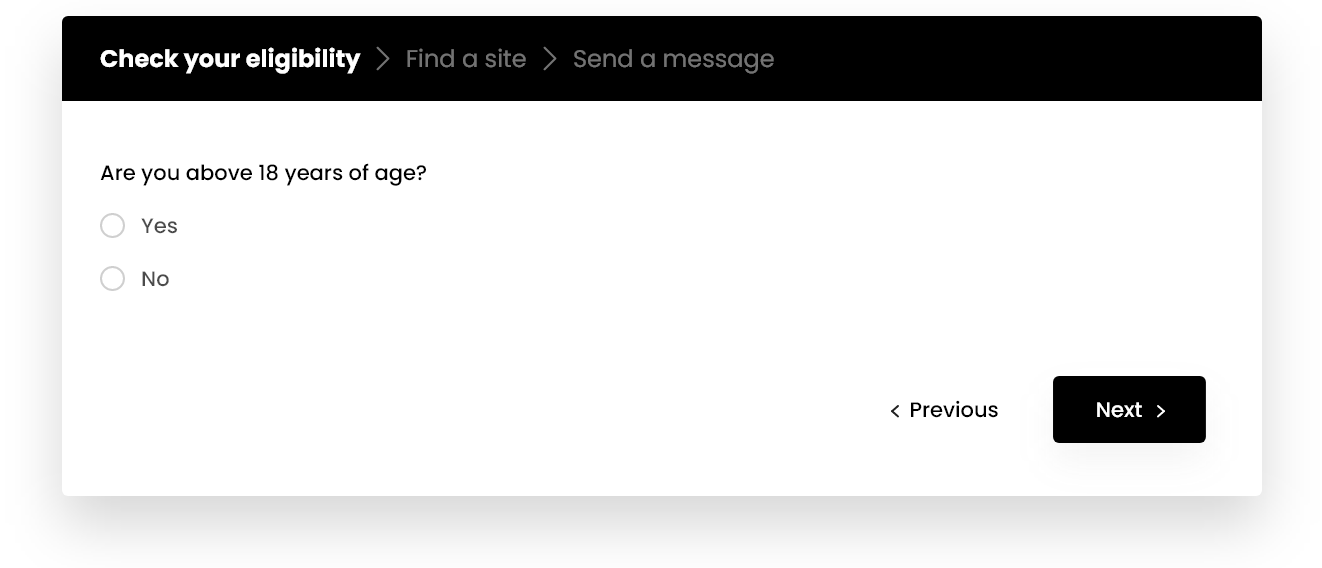
Complete this brief questionnaire (# questions, length of time) to help determine if you may qualify to be referred to a site recruiting in your area for further evaluation for potential participation in this clinical study.
You can also add your contact information to be notified of future Sanofi studies.
The prescreener preview is complete. You may now close the preview.
References
Version#, Approval date
Image copyright